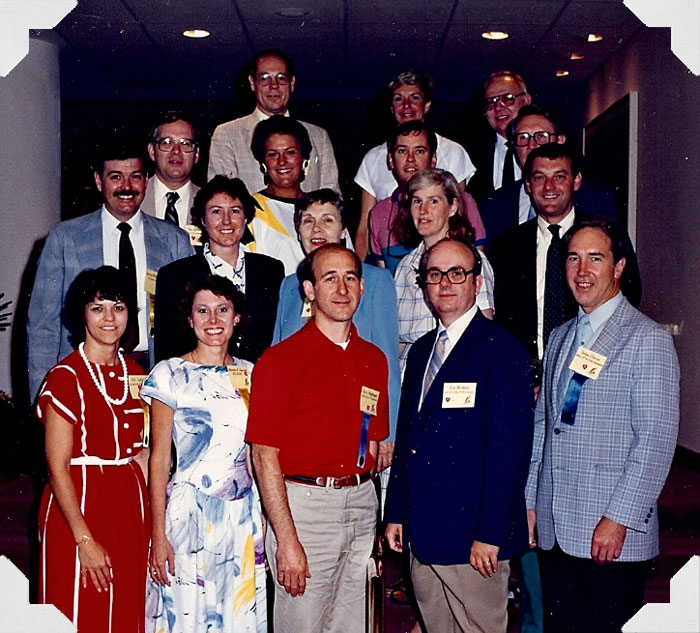
AIR’s story is not just about milestones. It is about people.
Throughout this anniversary year, we are sharing stories from members across generations—reflections on what AIR has meant to them, how our community has evolved, and why this work continues to matter. New stories will be added regularly, so we invite you to check back often and see how this living history unfolds.
We also invite you to add your voice. Submit your own story (150 words or fewer) to jchu@airweb.org and help shape the narrative of our community.
These stories are AIR.

Trudy Bers, AIR President 1995-1996
"I was privileged to meet lifelong colleagues who became my friends."
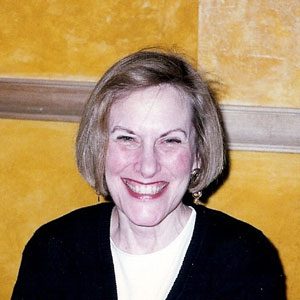
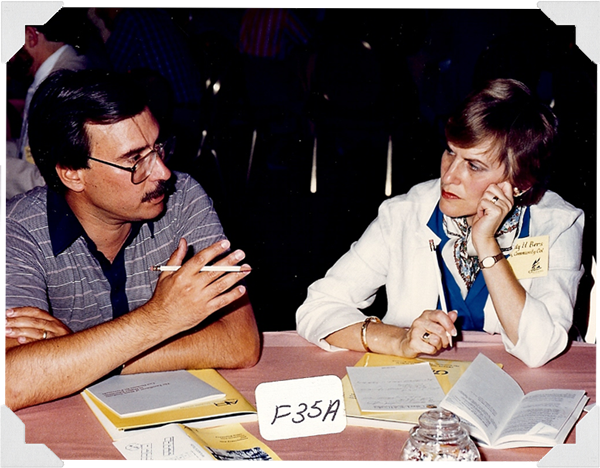
I came to AIR in the early 1990s, or maybe even the 1980s. My first AIR Forum was in Denver, where I knew no one. What I found was a conference ahead of its time in providing ways for people to connect—through continental breakfasts, optional and wonderful excursions to local sites, and session facilitators who made real attempts to engage attendees. I was privileged to meet lifelong colleagues who became my friends. And no, I never was able to create a robust elevator speech explaining IR.
Glenn W. James, AIR President 2016-2017
"AIR was an incubator for learning, growing, and propelling the improvement of higher education. … The Association and its members have achieved much and have done so with camaraderie, mutual encouragement, good humor, and empirical excellence."

I am exceedingly grateful for AIR and the extensive impact and influence that the Association has had upon higher education, associated institutions and entities, and the many colleagues and practitioners therein. AIR has been an indispensable learning laboratory and an outstanding convergence of ideas, thinkers, and doers who unquestionably have worked to cultivate and improve higher education locally and internationally. My involvement with IR began decades ago at Virginia Tech, which had a stellar IR operation and team that was led by James R. Montgomery, a founding member and early president of AIR, and Gerald W. McLaughlin, another prolific and generous contributor to the profession and to AIR during the first half century of the Association. I was fortunate to work with and among a dozen outstanding Virginia Tech IR staff members who were exceptionally skilled at developing research strategies to solve problems. They were exemplary at sharing solutions and knowledge with colleagues via presentations, publications, collaborations, and more. AIR was an incubator for learning, growing, and propelling the improvement of higher education. Co-authors and contributors to the published history of the first 50 years of AIR know that there are many wonderful contributors and contributions that are fundamental to the strength, value, and impact of AIR over the years. The Association and its members have achieved much and have done so with camaraderie, mutual encouragement, good humor, and empirical excellence. A substantial volume could be written about the mutually supportive partnerships among AIR and the affiliated international, regional, and state associations and entities in other related disciplines of the higher education enterprise. In the interest of brevity, I will simply say that AIR and its members have been tremendously impactful in an array of ways. I have witnessed it, and I have experienced it. I always will appreciate the synergy and interactive development of our Association and its many members. AIR is a treasure.
Jonathan Gagliardi, AIR President 2023-2024
"I’m so grateful to AIR for the profound and wonderful impact that its people have had on my life!"
It’s hard to believe that AIR has been my professional home for more than 15 years! It all began when I was lucky enough to be selected for the AIR, NSF, NCES Data Policy Institute. At the time, I was completing my Ph.D. program and trying to figure out what would come after. The program gave me an opportunity to spend an entire week in Washington, D.C., where I would go on to meet lifelong friends and mentors. It was there that I realized my desire to live in the District, my passion for the intersection between data, analytics, and organizational transformation, and the truly wonderful community that AIR has created and sustained. I’m so grateful to AIR for the profound and wonderful impact that its people have had on my life!
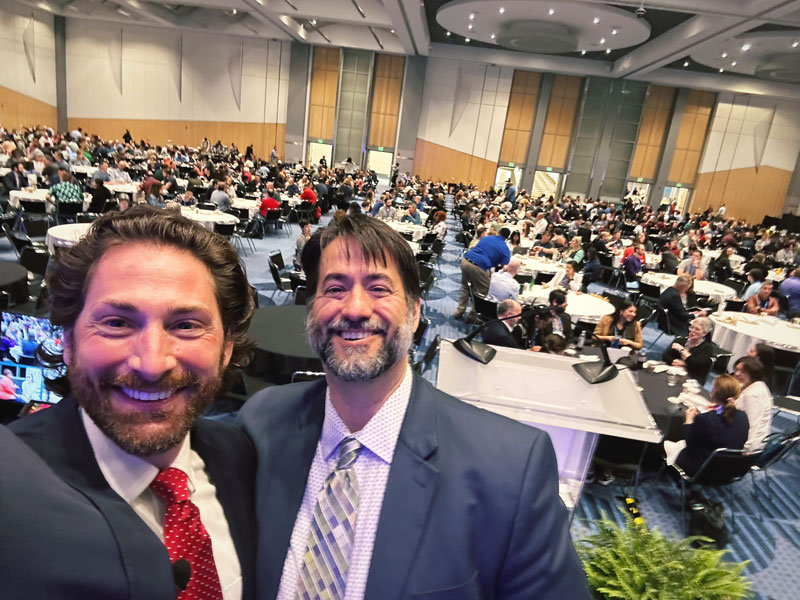
Robert Toutkoushian, AIR President 2009-2010
"AIR holds a special place in my heart."
AIR holds a special place in my heart. It was my first "professional home" that I stumbled upon when I started working in IR back in 1990 at the University of Minnesota. What I enjoyed the most about AIR is that it brought together researchers, practitioners, and administrators in a way that allowed us to work together to examine important issues for higher education. Folks such as Pat Terenzini, Ernie Pascarella, George Kuh, Gary Pike, John Smart, Fred Volkwein, Steve DesJardins, and other leading academics served as role models for how research can be integrated into the field of IR. The Association had formal connections with several leading academic journals and used them to highlight work presented at the annual conference. The discussions at the annual conference among people with different roles in IR were truly enlightening and energizing and had a big impact on my career.
Junelyn Peeples, AIR President 2021-2022
"During moments when the weight of leadership felt heavy, this community reminded me that I was not alone."
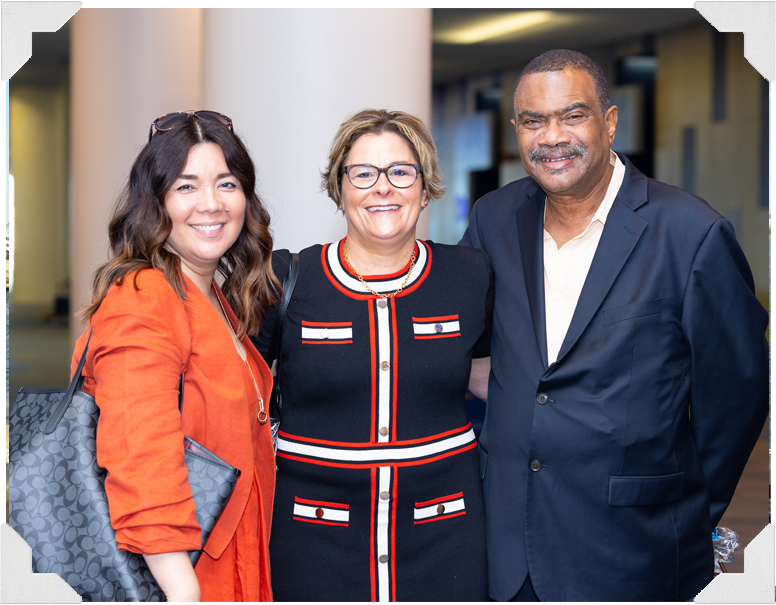
Serving as President of the Association for Institutional Research during a time of profound disruption, I experienced firsthand the power of professional community. As institutions faced volatility and uncertainty, AIR became a place of steadiness—where leaders could ask hard questions, test ideas, and feel supported.
Guided by a justice-, equity-, diversity-, and inclusion-centered (JEDI) approach, we strengthened Board governance to ensure greater clarity, transparency, and shared accountability. Our goal was simple: build structures that supported both the membership and the mission. Governance reform was not procedural—it was relational. It ensured that diverse voices were heard and that decisions reflected collective stewardship.
For me, AIR has been more than an association—it has been a professional anchor. During moments when the weight of leadership felt heavy, this community reminded me that I was not alone. It deepened my courage, sharpened my purpose, and reaffirmed my belief that ethical, equity-centered governance can transform institutions and the people who steward them.
William Lasher, AIR President 1982–1983
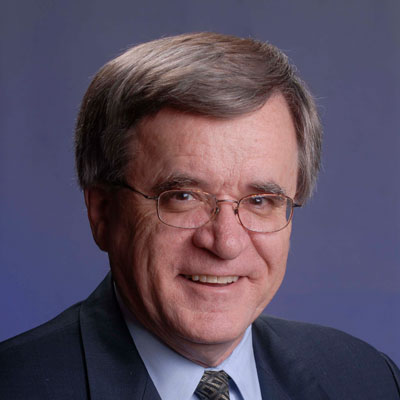
"The point of all this is that all my professional friends were/are from AIR."
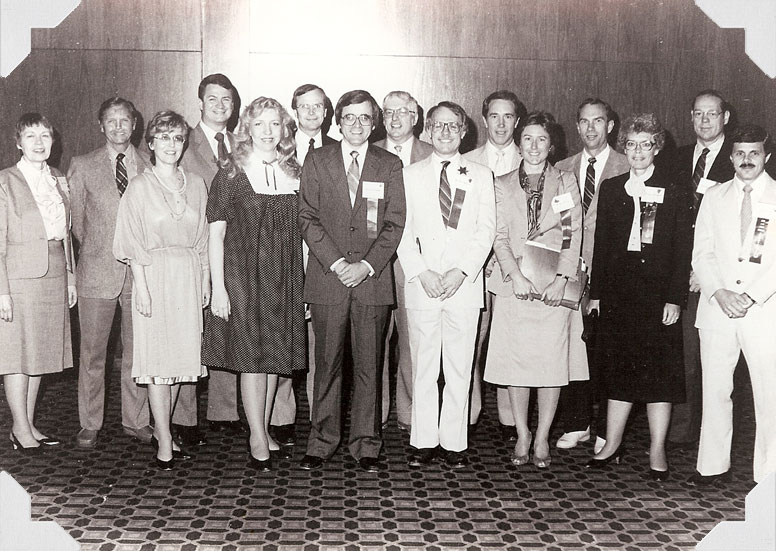
One beautiful spring day when I was a junior at the University of Rochester many years ago (there are a few beautiful days in Rochester), I had a thought: “How can I spend the rest of my life in college.” Well as it turned out, I did.
I went to the University of Michigan Center for the Study of Higher Education for a doctorate. There I learned about institutional research from Jimmy Doi, one of the early leaders in the field, and from Marv Peterson, a beloved mentor. That’s also when I attended my first AIR Forum—in New Orleans. That’s when I met Bill Tetlow, another past president who unfortunately passed a few years ago.
When I was invited to apply for the IR job at the University of Texas at Austin, I learned there were two other candidates: Leonard Romney from NCHEMS and Jim Firnberg from LSU. Since I knew them both, we discussed who should take the job. I guess I won.
Jim Firnberg became a life-long friend. We co-edited a New Directions in Institutional Research quarterly on “The Politics and Pragmatics of Institutional Research.” The editor-in chief of that series was then Marv Peterson and his associate editor was Pat Terenzini.
Several years after leading the Office of Institutional Studies (OIS) at UT Austin, I was asked to become the university’s Budget Director. I asked the VP for Business why he was interested in me. He said, “You know more about the Texas formula system than anyone else on campus.” That was true because OIS was responsible for all the data that went into the formula system for UT Austin.
One day, the UT President asked me how much accounting training I had. I said, “Zero.” I then told him my background was in IR and that I viewed the budget as an IR project. There were no more questions.
The point of all this is that all my professional friends were/are from AIR. Institutional Research has been my professional identity for a very, very long time. I value the friendships I’ve made, and the things I’ve learned. Thanks to all whom I’ve met along the way.
Michelle Appel, AIR President 2018-2019
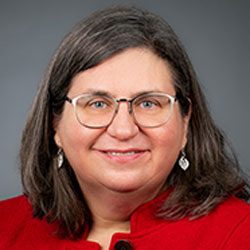
"It felt a lot like we feel now—lots of pressure, lots of worry over the implications, and AIR filling the gaps with lots of knowledge."
As we have been preparing data and trying to understand the new IPEDS ACTS collection, it feels like one of those "What do we do!?!" kind of moments. This has me thinking back to two IPEDS-related moments in the early part of my career, and AIR is at the center of them. The first was when I had questions about the GRS survey and the Student Right To Know Act. I was in a small office and needed some advice, and my boss said: "Call Dawn Terkla. She'll know. She's on the AIR committee for federal data." I called Dawn. She answered right away, and she did know the answer and was so helpful. The second was not long after that, when I was a leader in Maryland AIR, and IPEDS was about to go to a fully online collection and institute fines for non-compliance. AIR was there with grants to local organizations for training, sessions at the AIR Forum (featuring Dawn Terkla among others), and a community of people to support this massive effort. It felt a lot like we feel now—lots of pressure, lots of worry over the implications, and AIR filling the gaps with lots of knowledge.
Marvin Peterson, AIR President 1984-1985
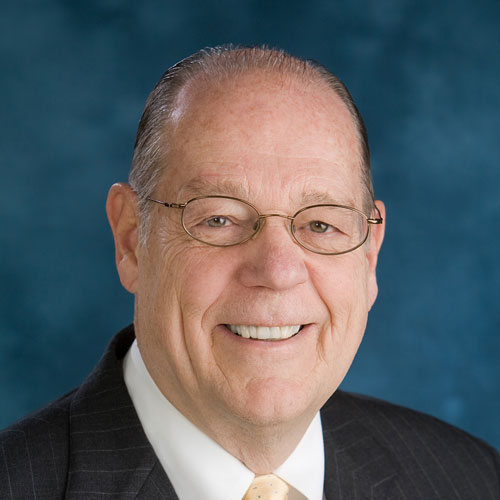
"Needless to say, it was a raucous affair since some of the Board members had never skied before."
When I came on Board and served as President, higher education was in financial distress and AIR specifically did not have uniform national membership. Marilyn McCoy was Vice President and, with Board backing, we launched a two-year national drive for membership, developed a model of regional associations using the AIR’s southern and eastern association as models, and designed a membership drive to extend membership and establish regional associations nationwide.
The AIR Board’s good-natured social nature is highlighted by events during Marilyn McCoy and my consecutive terms as President. During those two years, we held our annual meeting at the University of Colorado and then, on the weekends, gathered at Vail. Needless to say, it was a raucous affair since some of the Board members had never skied before. One member became memorable for tumbling and rolling all the way down the bunny slope while several of us cheered him on. You can always count on AIR members to cheer you on!
Marsha V. Krotseng, AIR President 1999-2000
"AIR and the Institutional Research community made those opportunities possible.... But, as I learned at my first AIR Forum, it’s the people and lasting friendships that make AIR truly special."
AIR has been my professional family since entering the IR field in the late 1980s. I was warmly welcomed at my first AIR Forum by the Association’s members, officers and Past Presidents, some of whom were among its founders. As someone just beginning her IR journey, I was inspired by those leaders and awed that they would eagerly talk with and mentor newcomers. Their example encouraged me to become more deeply involved in the Association, and I had the honor of serving as President in 1999-2000. My theme, Partnering for Informed Policy, reflected the partnerships AIR had begun to build with NCES and other organizations to share feedback, improve survey quality, and offer IPEDS workshops. That theme, along with a focus on data-informed decision-making, resonated through the evolution of my career, which included leading data collection, analysis, and strategic planning for several college and university systems and, ultimately, serving as a college president and trustee. AIR and the Institutional Research community made those opportunities possible through providing leadership development, a broad institution-wide perspective, and knowledge of how to transform data into valuable information for decision-making. But, as I learned at my first AIR Forum, it’s the people and lasting friendships that make AIR truly special.
Ellen Chaffee, AIR President 1991-1992
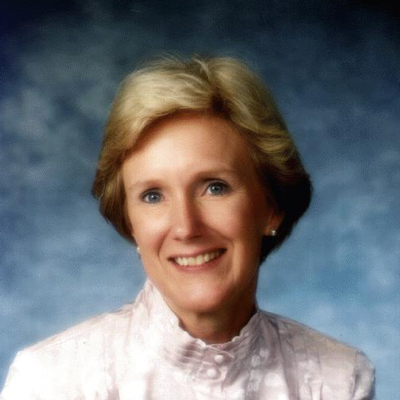
"... I'll always have great respect and fondness for AIR and everyone I worked with there."
In 1989, the legendary Deb Teeter seems to have decided that I was the President AIR needed next. It was not on my career road map, which may have been her reasoning. It was a pivotal era. My job was relatively high in the pecking order, and I was unaligned within the organization. The field of Institutional Research and AIR were moving to a new level of maturity, as exemplified by the change from a dedicated, hard-working organizer ED, the kind that every early-stage organization requires, to the professionally connected, insightful leader who could help take AIR to the next stage.
Afterwards, I veered off as my career road map kicked in again, but I'll always have great respect and fondness for AIR and everyone I worked with there. It was both consequential and great fun. What I've seen of AIR since then only increases my gratitude and respect.
John Muffo, AIR President 1993-1994
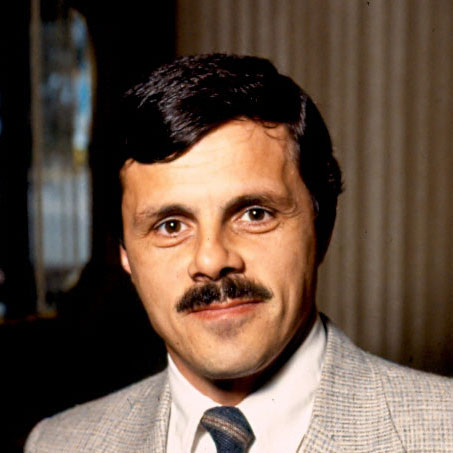
"It took me very little time when at the AIR Forum to realize that I had found a home, my people."
When I first attended the AIR Forum in 1976, I already had attended another national conference of an unrelated group and soon realized that that profession was not for me. At that time, I had been working in the other field for a couple of years and was looking for other options. During graduate school, I was fortunate enough to get an assistantship in IR and enjoyed the work. It took me very little time when at the AIR Forum to realize that I had found a home, my people. At no other conference since then (and I have attended some in other fields for various reasons) have I ever felt the same way. For forty years in a row, I came home to the Forum and involved myself in other AIR activities. I have also made lifelong friends in the process. AIR has had a tremendous impact on my career and my life.
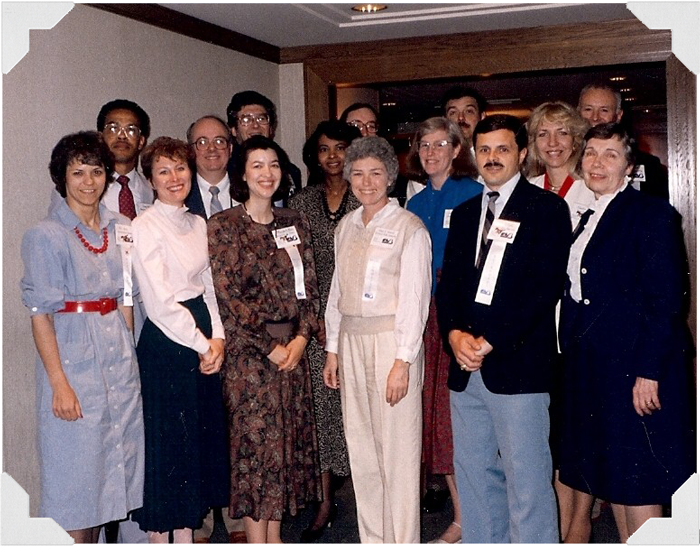
Victor Borden, AIR President 2003-2004
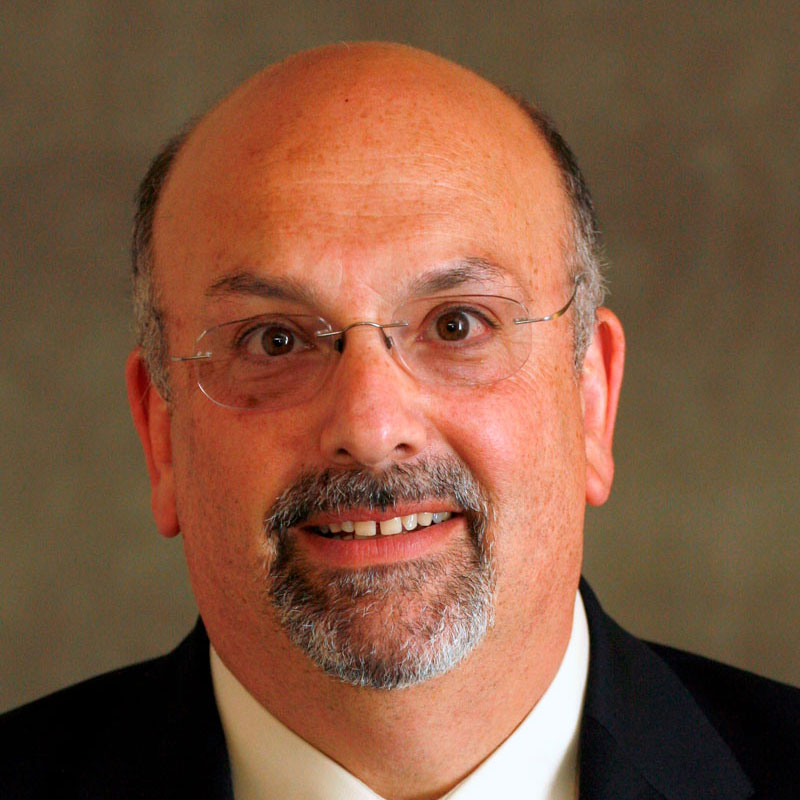
"I have had a long and very productive IR career, but I think it's the Windbreakers work that is my true legacy."
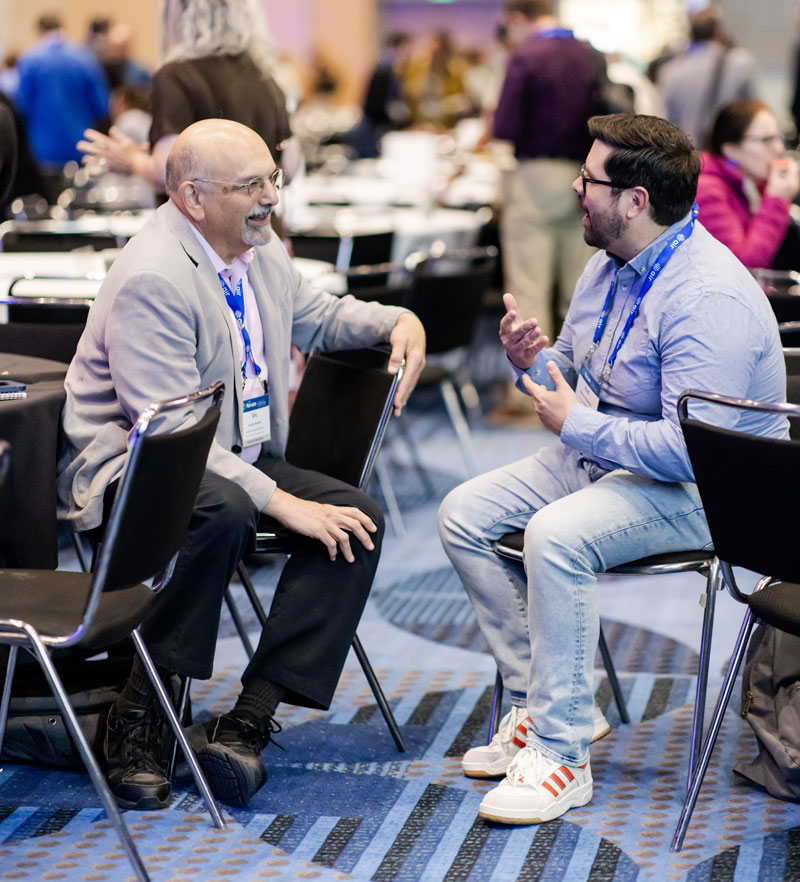
I am proud to have been a part of AIR's musical history. I learned about an early AIR band, the Airtones (a barbershop quartet) from my early mentors. Several colleagues and I wanted to establish something a little more irreverent. And so the AIR Windbreakers were born. They appeared in pre-Windbreakers form as part of a talent show offered by AIR members (including Cliff Adelman playing cocktail piano) presented at the 2001 Long Beach Forum on the Queen Mary. The first official Windbreaker concert was then offered at the 2002 Toronto Forum. But perhaps the greatest performance was at the 2005 San Diego conference. We actually played twice there but only the first time was well attended. The second time, when we played outside, we competed with the Steve Miller Band playing at a neighboring hotel. The Windbreakers final appearance was at the 2010 Forum in Chicago. For those interested, the song catalogue, and pictures from several appearances, are available on my personal web page, with some videos of the Chicago sets in my YouTube channel. 🙂
Gerry McLaughlin, AIR President 1989-1990
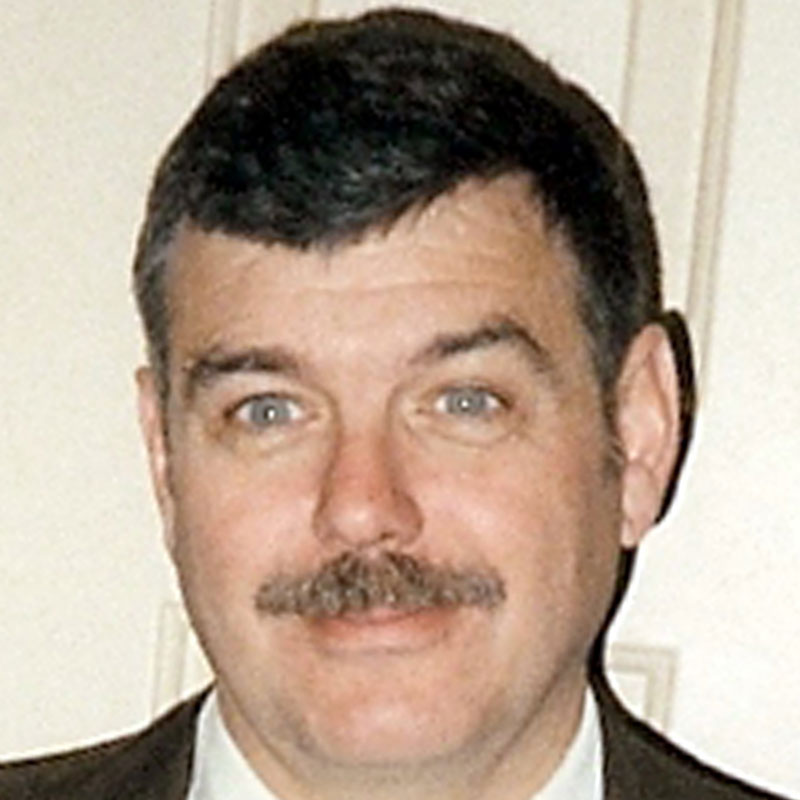
"That is how collegial we were."
I inhered Chair of the Publication Board from Marv (who we called "Marvelous Marv" and who was Past President of both SCUP and AIR). For my first Publication Board meeting, I was trying to think of all the members, but I kept missing one. I called Marv and explained my predicament. Marv then resolved my quandary. He said, "It's you.”
Another memory is when Jean Chulack informed me that I would need a gavel to run the Business Meeting and then present it to Mantha Mehallis, who followed me as President. We had lost the gavel, as I never used it in my entire year as President. That is how collegial we were. We had to buy another gavel just for the business meeting.