
Get to Know Our Community: Osundwa F. Wanjera
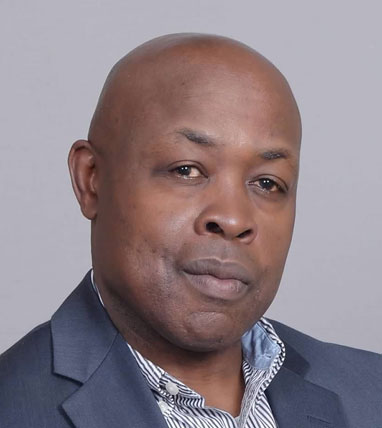
Name: Osundwa F. Wanjera, PhD
Title: Director of Institutional Research
Organization: Pratt Institute
Can you describe your current role in institutional research and how it supports your institution’s mission?
I currently serve as Director of Institutional Research and Assessment at a highly selective institution in the Northeast, where I lead the development and execution of data strategy in support of institutional planning, student success, and resource allocation. My role sits at the intersection of analytics, policy, and strategy. I oversee the production of key institutional metrics, including enrollment trends, retention and graduation outcomes, faculty analytics, and financial modeling, and I work closely with senior leadership to translate these data into actionable insights.
A central aspect of my work involves ensuring that data are not only accurate and accessible, but also meaningfully aligned with the institution’s mission. This includes supporting initiatives related to equity and access, evaluating the effectiveness of academic and co-curricular programs, and helping leadership understand the long-term implications of strategic decisions. In many respects, institutional research functions as the connective tissue between mission and operations, and I view my role as helping the institution remain both evidence-informed and mission-driven.
What sparked your interest in institutional research, and how has your career evolved since then?
My interest in institutional research emerged from a broader engagement with economics and public policy, particularly questions related to access, equity, and outcomes in education. I was initially drawn to understanding how systems shape individual trajectories, and higher education provided a compelling context in which those dynamics are both visible and measurable.
Over time, my career has evolved from a primarily analytical focus to a more strategic and leadership-oriented role. Early in my work, I was focused on modeling and statistical analysis. As I progressed, I became increasingly involved in institutional decision-making, advising senior leaders, and shaping data governance and strategy. This evolution has allowed me to not only analyze data, but also influence how data are used, interpreted, and embedded into institutional culture.
What’s one project or accomplishment in your IR work that you’re especially proud of—and why?
One accomplishment I am particularly proud of is advancing the use of rigorous, quasi-experimental methods within institutional research to better evaluate the effectiveness of student success initiatives. In many cases, institutions rely on descriptive or correlational analyses that can suggest promising relationships, but do not fully account for underlying differences between students.
In my work, I have focused on introducing approaches that strengthen causal interpretation, including propensity score methods, longitudinal modeling, and other techniques that help approximate more credible comparisons. This has allowed for a more accurate understanding of program impact and has supported more informed decision-making at the institutional level.
What I find most meaningful about this work is the shift it represents, moving from surface-level insights to deeper, methodologically grounded evidence. It reflects a broader commitment to ensuring that institutional decisions are informed not just by data, but by the right analytical frameworks applied with care and precision.
What do you find most rewarding (or enjoyable) about working in IR?
The most rewarding aspect of working in institutional research is the opportunity to shape decisions that have tangible impacts on students and the institution as a whole. There is a unique satisfaction in seeing data move beyond reports and dashboards into conversations, policies, and actions.
I also find it particularly rewarding to elevate data literacy across the institution. Helping colleagues understand not just what the data show, but how to interpret them critically and use them responsibly, is an important part of the work. When stakeholders begin to ask more sophisticated questions and engage more deeply with evidence, it signals that the culture is shifting in a meaningful way.
When you’re not working with data, how do you like to spend your time?
Outside of work, I enjoy spending time with my family and engaging with topics that extend beyond my professional responsibilities. I have a strong interest in history, particularly in understanding the individuals, events, and ideas that have shaped societies over time. I am also interested in building and exploring data-driven projects outside of higher education, including those related to finance and broader analytical applications.
These interests often complement my professional work, as they allow me to think about data and decision-making in different contexts and from different perspectives.
What’s something about you—personal or professional—that might surprise your colleagues?
One thing that might surprise my colleagues is the extent of my interest in history, particularly military and foreign history. I am especially drawn to understanding consequential figures, strategic decisions, and pivotal events, and how they shape institutions and societies over time. In many ways, this complements my professional work, as it reinforces my interest in how systems evolve, how decisions carry long-term consequences, and how context matters in interpreting outcomes.